If you have a termite report in your hand, you are dealing with risk, money, and timelines. Lenders, buyers, sellers, and homeowners all read these documents for different reasons. The technician wrote it for a narrow purpose, usually to document evidence, risk, and repair recommendations. Knowing how to translate that field language into decisions you can trust is a skill. This guide walks through the parts of a termite report, the red flags that matter most, and how seasoned inspectors think when they write one.
Why termite reports look the way they do
Termite inspection reports grew out of real estate transactions. Banks wanted a uniform document to clarify whether a property showed signs of wood destroying insects. Over time, that standardized form became an all-purpose field report for termite control professionals. The structure has a logic, even if the phrasing feels stiff: confirm what was inspected, define the limits, note findings, classify damage and activity, then set out recommended treatment and repairs.
In practice, two truths shape every report. First, inspectors cannot see through drywall or insulation. Second, termites behave like slow, patient miners. A skilled inspector looks for patterns that connect small clues into a larger picture. When you read the report, read it with the same pattern mindset. A single mud tube in a crawlspace tells one story. A mud tube plus high moisture plus blistered paint on an adjacent wall tells another.
The anatomy of a termite report
Most reports contain similar sections, even if the form names differ. The language varies between companies and states, but the core ideas repeat.
Scope and limitations
This is the inspector’s boundary line. It lists the areas that were inspected, what was inaccessible, and why. Expect notes like: locked utility room, heavy stored items, low-clearance crawlspace, recent rain, or HVAC closet not opened. It should also mention methods used, such as probing exposed wood, visual inspection, moisture meter readings, and, in some cases, borescope use through existing openings.
What matters: inaccessible does not mean safe. If a report says 30 percent of the crawlspace was inaccessible due to clearance under 18 inches, that is a chunk of your structure uninspected. If the home has a raised porch enclosed with lattice, many reports exclude the void behind it. Make a mental list of those exclusions, because they become your “unknowns.” Unknowns drive contingency planning. They also help you prioritize follow-up evaluation.
Observations and evidence
This is the heart of the report. You will see phrasing like “visible evidence of subterranean termites,” “no visible evidence,” “old damage,” “active infestation,” “frass,” “pellets,” “mud tubes,” or “conducive conditions.” A thorough report will distinguish between insect types: subterranean termites, drywood termites, dampwood termites, carpenter ants, or wood-boring beetles. Not every wood destroying organism leads to the same treatment plan.
Key translation tips:
- “No visible evidence” means nothing was seen during this inspection, in those accessible areas, under current conditions. It is not a guarantee of absence. “Old damage” means the inspector did not find live insects or live galleries at the time, but saw scarring, hollowed wood, or paint rippling consistent with prior activity. Old damage can still compromise strength. “Active” is strong language. To justify it, inspectors typically need live insects, fresh mud tubes that are moist and sticky, or pellets that reappear after cleanup.
Diagram or site map
Good reports include a sketch of the structure, the cardinal directions, and notations where evidence was found. The diagram should label rooms, porches, garages, patios, and add-on structures. Ideally it marks slab joints, expansion cracks, plumbing penetrations, and grade levels.
Hold the diagram next to your floor plan. If treatment is recommended, that sketch becomes a work plan. If the diagram is vague or missing orientations, ask for clarification. A mis-labeled north arrow can send a technician to the wrong wall six months later when you find a recurrence.
Conducive conditions
These are conditions that do not prove termites are present, but make activity more likely or make inspection difficult. Common notes include earth-to-wood contact at deck posts, mulch piled higher than the slab edge, leaky hose bibs, poor drainage, downspouts discharging against the foundation, wood debris in the crawlspace, form boards left in place, and high indoor humidity.
Experienced inspectors draw lines between these notes and real-world instances. For example, mulch up to the weep screed invites subterranean termites to bridge into stucco unnoticed. In a report, the presence of high moisture and earth-to-wood contact together is more predictive than either alone.
Damage classification
Some reports quantify damage, for example “localized minor damage to subfloor at bathroom 1, east wall,” or “structural damage suspected at sill plate, northwest corner.” Strong reports describe the material (pine sill plate, OSB rim), the approximate size of the compromised area, and whether the member still resists probing.
When you see “structural evaluation recommended,” that is your cue to involve a contractor or structural specialist. Pest pros can identify and expose, but they do not engineer loads. The better reports explain whether the damage is cosmetic, serviceable with a sistered member, or likely to require partial replacement.
Treatment recommendation
This portion lays out the control strategy. For subterranean termites, that often means a perimeter soil treatment with a non-repellent termiticide, targeted interior soil injections at plumbing penetrations, or a monitoring and baiting system. For drywood termites, options include localized wood injection, whole-structure fumigation, or heat treatment, depending on the scope. If the report lists “retreat and repair warranty,” read the fine print about what triggers re-treatment and what is excluded.
The terminology carries weight:
- “Corrective treatment” indicates evidence or damage was found. “Preventive treatment” suggests no active infestation was detected, but conditions or risk justify protection. “Spot treatment” means a limited intervention in a defined area, appropriate for small, isolated drywood galleries or a discrete subterranean entry point. “Full perimeter treatment” signals a property-wide soil barrier or bait array, more common for subterranean systems or when history suggests multiple entry points.
Monitoring and reinspection plan
Many reports will suggest a reinspection window, especially after a treatment. Terms vary from 30 days to a year. Good practice ties monitoring intervals to the biology of the insect. Subterranean termite colonies cycle their foraging patterns over weeks to months. A meaningful recheck often happens around 60 to 90 days after treatment, then annually.
How inspectors infer activity from small clues
One spring, I crawled under a 1950s ranch that had an impeccable living room and a garage that smelled like wet cardboard. There were no dramatic mud tubes on the foundation. What I did see was a pencil-thin vein of mud running up a plumbing pipe, two feet of sill plate that sounded like a drum when tapped, and a moisture meter pegged to 22 percent near a shower curb. The report did not scream infestation, but it spoke it in a whisper. We opened a small section of baseboard, found live subterranean termites behind the foil vapor barrier, and documented active galleries. The report told the story in dry language, the way it should, but the clues had already stacked up.
Reading a report well means understanding that field techs translate those whispers into sentences. If the report mentions pellets that keep reappearing beneath a window stool, that points toward drywood termites in the sash or stool, not carpenter ants. If the note says “mud tube scraped away, reformed within a week,” that is a near-certain sign of an active subterranean route that remains connected to the colony.
WDI, WDO, and local variations
Depending on where you live, the document might be called a WDI (wood destroying insect) or WDO (wood destroying organism) report. In the Southeast and Mid-Atlantic, subterranean termites dominate. Along coastal and arid belts, drywood termites take a larger share. In the Pacific Northwest, dampwood termites and moisture ants complicate the picture. In older Northeastern housing stock, powderpost beetles may appear in hardwood flooring and joists. The species drives both evidence and control. When you see “frass,” the type of frass matters. Drywood frass looks like tiny, faceted pellets, often kicked out of “kick-out” holes. Carpenter ants produce sawdust-like frass with insect parts mixed in, a different situation entirely. A good report will not lump them together.
Interpreting “no visible evidence”
People relax when they read those words. They should, but only within reason. If the report lists no visible evidence but also lists dozens of exclusions, heavy stored items along every garage wall, deep mulch over the slab edge, and a past history of subterranean treatment, your risk is not zero. What “no evidence” really buys you is a clean baseline. It means the inspector had no reason to escalate. If you are buying, it still helps to remove obstructions and allow a follow-up inspection within your contingency window. If you are maintaining a home, it is a good moment to correct conducive conditions, because they are the quiet bridge between no evidence and next year’s problem.
When diagrams and damage notes matter more than the summary
I have seen summary sections that read like a green light, then a diagram dotted with six question marks in the crawlspace. Always read the map and the marginalia. That is where the nuance hides. A sling of mud against the west stem wall near a downspout is more informative than a generic “evidence in crawlspace.” If the diagram shows evidence at both the north and south walls of a slab-on-grade addition built ten years after the original home, that points toward differential settlement or construction joints being exploited. Treatment extends further when the entry points are far apart.
Domination Extermination and on-the-ground reality
The paperwork is only as good as the crawlspace time behind it. At Domination Extermination, a Pest Control in South Jersey, NJ, our teams learned to treat the report as both artifact and field note. In one Gloucester County split-level, the first inspector logged “old damage” at a sill and recommended monitoring. Three months later, a different tech caught fresh frass beneath a sill window that faced south. The report addendum updated the classification to likely drywood activity confined to the sash. We executed a localized wood injection and documented the repair. The initial “old damage” note was fair, but the reality changed. Reports should evolve as new evidence appears.
In another case, a buyer’s lender requested a WDI clearance for a Mantua Township property. Our report listed “no visible evidence,” but it flagged the attached deck for earth-to-wood contact at two rear posts and missing ledger flashing. Those are not termite findings. They are conditions that push probability in the wrong direction. The seller chose to address the flashing and post bases prior to closing. Six months later, the same buyer called about winged insects by a bathroom window. They were ants, not termites, identified quickly because the report had already scoped where termite risk was lower and where moisture handling had improved.
Subterranean versus drywood, the report’s fork in the road
Subterranean termites travel through soil and build mud tubes to maintain humidity. Reports will often talk about tubes, shelter mud, swarming in spring, and soil treatments or baiting. Drywood termites live entirely in the rodent control wood they consume, push pellets out of kick-out holes, and swarm at different times depending on species and region. Reports lean toward localized treatments or whole-structure options like fumigation or heat for drywood cases. The fork matters: a subterranean recommendation for a drywood problem adds cost without effect, and a localized drywood treatment for a house-wide subterranean risk misses the bigger picture.
If your report references plumbing penetrations, expansion joints, slab cracks, or foam insulation below grade, the inspector is thinking subterranean pathways. If it mentions window and door frames, furniture, or isolated attic rafters with pellets underneath, the thinking is drywood. Both can exist in the same property, but the evidence will usually separate them.
Reading moisture like an inspector
Termites chase moisture. Inspectors carry meters for a reason. Numbers matter. Wood at 6 to 12 percent moisture content is normal indoors in many climates. When readings near a baseboard jump to the high teens or low twenties, and the paint nearby has mild blistering, that wall is inviting. Reports that tie moisture readings to evidence are gold. If your report lists “elevated moisture at hall bath east wall, 20 to 24 percent,” that is not a termite diagnosis. It is a leak diagnosis masquerading as a risk factor. Fix the moisture source. A dry house resists both subterranean and drywood termites better than a damp house with a perfect treatment plan.
How other pests show up in termite reports
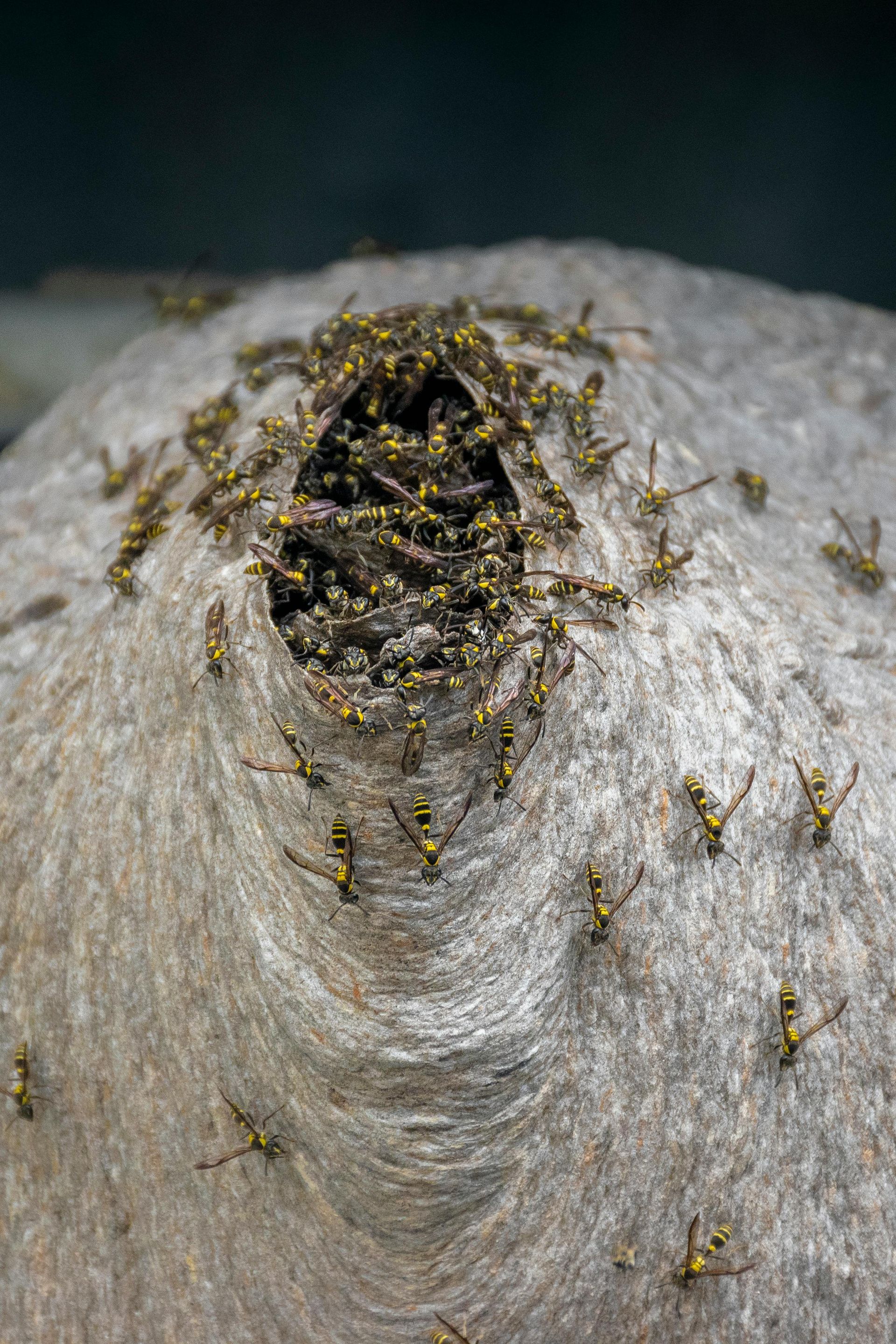
Pest control is a broad field, and good termite reports sometimes note non-termite activity that can cloud the picture. Ant control questions arise frequently because carpenter ants and subterranean termites both tunnel and hollow wood. Bee and wasp control matters around eaves where inspectors find paper wasp nests or carpenter bees drilling into fascia. Those holes confuse the untrained eye. Mosquito control notes sometimes appear in the form of standing water under a home. Rodent control shows up as gnawed vapor barrier or displaced insulation that hides sill plates from view. Spider control might be mentioned when heavy webbing obscures corner joints that deserve a close look. Bed bug control has no overlap with termites, but an inspector may flag clutter that limits access everywhere, making any inspection, including termite control work, less reliable. Cricket control occasionally appears in crawlspaces dense with field crickets which complicate nocturnal checks. Carpenter bees control shows up when fascia or deck railings show round, clean holes and yellow staining beneath, which is not termite damage but still wood destroying and worth its own plan.
These are not tangents. They are the reality of houses that have multiple small systems intersecting. When a report notes ancillary pests or conditions, it is giving you a fuller picture of the inspection environment and the obstacles to clarity.
Warranty language, and what it really covers
Many termite treatments come with a warranty. Read the definitions. “Re-treat only” means the company will apply more chemical if activity recurs but will not pay for wood repair. “Repair and retreat” means the company accepts some responsibility for damage that develops after treatment, with limits. Most warranties exclude new additions, planter boxes attached to the structure, wood-to-soil landscape ties, or any area that remained inaccessible at the original inspection. If a report shows inaccessible crawlspace zones, you do not have seamless coverage. If a report recommends trenching and rodding along the entire foundation, but your landscaping blocks 25 percent of it and remains unaltered, the warranty will likely carve out those areas.
Domination Extermination handles this by documenting obstructions with photos in the report packet, then offering a return visit after the homeowner modifies access. A clean perimeter line with photographic proof protects everyone. It also improves efficacy. A break in the barrier is where termites find a way.
Making sense of cost and scope without a sales pitch
When people see a recommendation for both a perimeter soil treatment and interior injections at plumbing penetrations, they sometimes ask if both are necessary. The answer depends on the construction. A monolithic slab without cold joints behaves differently than a post-tension slab with multiple penetrations. If the report documents evidence clustering around a master bath, interior injections at those penetrations might be the shortest route to the active galleries. If evidence appears at multiple sides of the house, a perimeter plan fits. These judgments are not one-size-fits-all. Lean on the diagram and the observations to decide whether the proposed scope matches the evidence.
How to use a termite report during a real estate transaction
If you are the buyer and the report lists active infestation or significant old damage, that becomes negotiation content. More importantly, it becomes a timeline item. Treatments like perimeter soil applications can be done promptly, but whole-structure fumigation or heat treatments for drywood termites require scheduling, aeration windows, and sometimes gas shutoffs. A closing in five days will not fit a fumigation calendar without stress. If the report suggests “further evaluation” by a contractor for suspected structural damage, get it scheduled before you commit to dates. Lenders read those lines carefully.
If you are the seller, understand that a clean report is not a guarantee against later claims if you have concealed inaccessible areas or painted over suspicious baseboards the week before inspection. Transparency about repairs and prior treatments helps both sides. Attach prior termite control documentation to the report packet. It turns unknowns into known history.
Two simple checklists to anchor your reading
Use these brief checklists to triage a report quickly, then dive back into the prose for detail.
- Five things to underline in the scope section: Inaccessible areas and why they were inaccessible Tools and methods used, including moisture readings Structures included and excluded, such as detached garages or sheds Weather conditions noted that might affect findings Any disclaimers about finished basements, foam insulation, or wall coverings Five evidence markers that elevate concern: Live insects found or photographed Fresh, moist mud tubes or tubes that reformed after removal Reappearing drywood pellets beneath the same opening Elevated moisture tied to wood components, especially near plumbing Multiple, separated locations with evidence on the diagram
When a second opinion is worth it
There are honest disagreements in this trade. One inspector might classify a gallery as old damage, another might probe deeper and find fresh workings. If a report’s recommendations feel misaligned with its evidence, ask for a reinspection with a different tech or from another company. At Domination Extermination, we invite homeowners to be present for reinspections when there is uncertainty. Seeing the probe, the tube, the pellet under magnification, or the moisture meter reading often clarifies the argument. A short on-site conversation outperforms a long back-and-forth over email.
Translating recommendations into action
Most reports end with a tidy block of next steps. Think of them in three layers. First, address conducive conditions. Change drainage, lower mulch, add downspout extensions, fix leaks, add proper clearance between soil and siding, and remove wood debris. These steps reduce future risk, regardless of treatment choice. Second, implement the recommended control for the insect documented. Choose soil treatments or baits for subterranean activity, targeted injections or whole-structure solutions for drywood, and remember that combination plans are common in complex cases. Third, plan monitoring. Calendar a check at the interval the report suggests, then keep photos of any evidence you find between visits. Documentation helps trend the story over time.
A note on language you might see and what it implies
Reports sometimes use cautious words. “Suspected,” “possible,” or “consistent with” signal that the inspector has not directly observed live insects, but the signs match a pattern. They are not weasel words. They are professional hedges that keep the report honest when drywall blocks direct confirmation. If a wall sounds hollow and the baseboard swells, that is consistent with termite galleries, but without opening the wall the inspector is not going to claim direct evidence. Treat these phrases as prompts to either authorize limited exposure for confirmation or to accept a treatment that addresses a probable risk.
Putting it all together
When you read a termite report, do it like you would read a good map. Start with the legend, the scope and limitations. Walk the path of observations, noting where the clues run thick. Count the unknowns. Weigh the treatment against the evidence, the construction type, and the local species mix. Consider the warranty in light of the access provided. Then, decide what to do next, not just what to sign.
Termite control is a mix of science and craft. Reports are the written trace of that craft. Companies like Domination Extermination learn, case by case, how small variables affect outcomes, from a leaky sill cock that raises moisture in one wall to a decorative planter box that bridges a barrier in summer. Those lessons show up as better diagrams, sharper language, and treatment plans that fit the property, not a template.
If your report leaves you with questions, that is not a failure. It is an invitation to clarify. Ask where the inspector could not go and why. Ask what evidence would change a recommendation. Ask what the next most informative step would be if you could open one small area. A clear termite report gives you more than a yes or no. It gives you a way to think about your home’s invisible parts and the small, patient insects that test them.

Domination Extermination
10 Westwood Dr, Mantua Township, NJ 08051
(856) 633-0304